
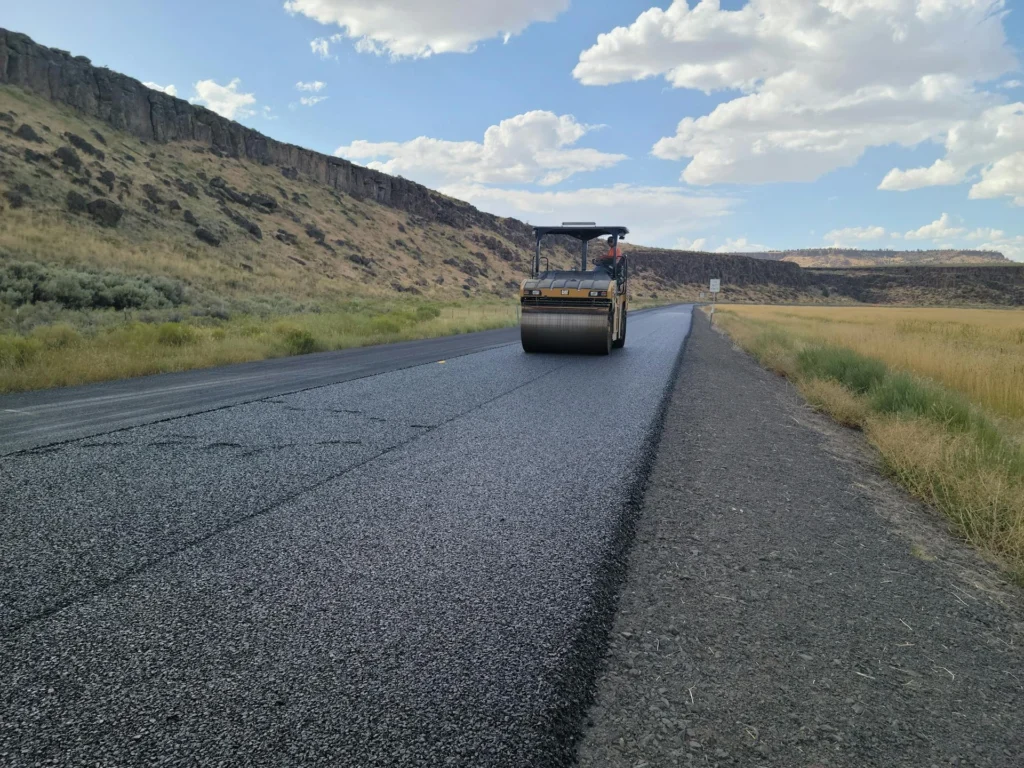
Road construction in Abu Dhabi isn’t just about laying asphalt and marking lanes. Every project, whether it’s a private villa driveway or a major highway, must pass through the rigorous approval process of local authorities like the Department of Municipalities and Transport (DMT) or the Integrated Transport Centre (ITC).
This requirement exists for solid reasons. Official approval ensures your road meets Abu Dhabi’s strict safety standards, uses approved materials, and complies with local regulations. Without it, you’re looking at project delays, financial penalties, and potential legal complications that can halt construction entirely. Choosing between asphalt and concrete is the first major technical decision a developer faces, and the approval process serves as your project’s safety net. It protects you from costly mistakes, ensures long-term durability, and gives your development the legal standing it needs for handover and registration.
The local authorities govern all road-related construction in Abu Dhabi. Their mandate covers everything from material specifications to traffic flow design, ensuring every road in the emirate meets international safety standards.
Approval requirements vary based on project type. Asphalt roads face different criteria than concrete roads or interlock pavements. Each material type has specific thickness requirements, base preparation standards, and quality benchmarks that must be met before approval is granted. In the UAE’s unique environment, thermal expansion in concrete and bitumen softening in asphalt are critical factors reviewed by engineers.
The authority’s standards cover multiple aspects: structural integrity, drainage systems, road markings, signage placement, and accessibility features. These aren’t arbitrary rules—they’re built on engineering principles and safety data collected from thousands of road projects across the UAE. Private developments, commercial complexes, and government infrastructure all fall under this jurisdiction.
Operating without proper permits puts your project in legal jeopardy. Abu Dhabi authorities won’t issue completion certificates for developments with non-compliant roads. This blocks property handovers, sales, and occupancy permits. Penalties for non-compliance can be severe, often starting at AED 50,000 and climbing significantly for repeated violations. More importantly, you’ll be forced to demolish and reconstruct non-compliant work, multiplying your costs.
Official standards are written in response to real-world data. Required road widths, curve radii, and sight distances are calculated to prevent collisions and accommodate emergency vehicle access. Proper signage and Road Markings reduce driver confusion. When an authority approves your project, they are confirming your design won’t create unnecessary risks for users.
Approved materials are tested for the UAE’s extreme climate. Summer temperatures regularly exceed 45°C. Approved asphalt mixes maintain structural integrity despite the heat, while concrete designs account for massive thermal expansion. A road built to these standards typically lasts 15–20 years, whereas non-compliant work often fails within 3–5 years.
Financial institutions require official road approval before releasing project funds. Banks won’t finance developments with uncertain compliance because it affects property values. The certificate of completion for road works is a prerequisite document in your overall building approval package.
Engineers analyze your project’s impact on surrounding traffic patterns. They ensure your access points—specifically RTA Approved Entry and Exit Works—don’t create bottlenecks on adjacent public roads. Lane widths and turning radii must accommodate everything from compact cars to heavy industrial trucks.
When planning a project via roadcontractorabudhabi.com, the choice between asphalt and concrete involves comparing initial investment against long-term resilience. Asphalt is generally favored for its lower initial cost and the speed at which it can be laid and opened to traffic. It provides a smoother, quieter ride and is significantly easier to repair or resurface when wear and tear occur. However, in the intense Abu Dhabi heat, asphalt requires specialized polymer modifiers to prevent softening and deformation.
Concrete, on the other hand, offers superior durability and a lifespan that can reach up to 40 years with minimal intervention. It does not soften under high temperatures, making it ideal for heavy-duty industrial zones or bus lanes. The trade-off is a much higher initial construction cost and a complex repair process if the slabs eventually crack. Additionally, concrete roads can be noisier and require precisely engineered expansion joints to handle the UAE’s thermal fluctuations.
We start every project with a compliance consultation, reviewing your plans against current Abu Dhabi requirements before a single shovel hits the ground. Our material procurement follows the approved supplier list exclusively. We source asphalt mixes and concrete grades that carry certifications matching local specifications.
Throughout construction, we maintain rigorous documentation including compaction test reports for the road base, material batch certificates for asphalt and concrete, and thickness measurements verified by third-party labs. We also conduct alignment checks for Curb Stone Installation. We coordinate directly with inspection teams, scheduling site visits at appropriate milestones. Final handover packages include as-built drawings and inspection sign-offs, providing you with a complete compliance file.
Government infrastructure projects are the most obvious candidates, as highways and arterial roads set the benchmark for compliance. However, residential villa communities also need approval for internal roads and access points. Commercial developments like shopping centers, office parks, and hotels must obtain certification for all on-site roads, parking areas, and loading zones. Industrial facilities handle heavy vehicle traffic that demands reinforced construction, while mixed-use developments require complex reviews to ensure different traffic types interact safely.
Legal assurance ranks first among approval benefits. You can hand over projects and complete sales without worrying about compliance issues surfacing later. Furthermore, infrastructure built to high standards delivers reliable performance for decades. Maintenance costs drop substantially when roads are built right from the start. Using a professional contractor like Earth Movers International ensures that your Parking Area Construction or Asphalt Road Construction adds value to your property rather than becoming a future liability.
The process begins with submitting detailed designs to the relevant authority (DMT/ITC) through their online portal. You’ll need architectural drawings, material specs, and geotechnical reports. They review the submission, conduct site inspections, and issue certificates once requirements are met.
Yes. Any road connecting to a public street requires official certification. Even if the road is on private land, its impact on the public network and safety must be verified before a completion permit is issued.
Standard approvals take 6–12 weeks. This includes the initial plan review and construction monitoring at various phases. Complex projects involving major intersections may take longer.
Yes. Asphalt is typically required for high-traffic roads, while Interlock Installation is approved for parking areas, pedestrian zones, and low-speed internal community roads.
The Road Base Material Supply is the most critical part of the approval. Authorities mandate specific compaction levels for the base layer because it provides the structural foundation for both asphalt and concrete surfaces.
